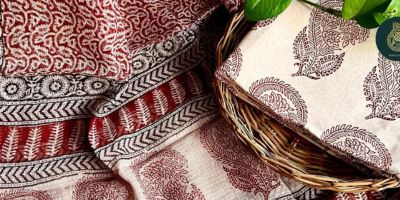
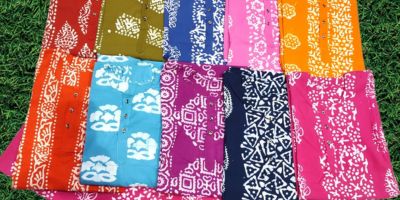
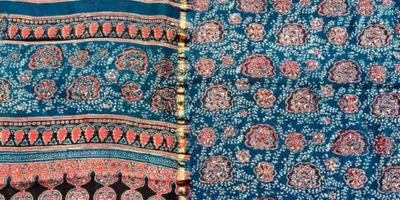
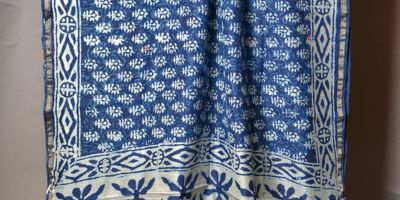
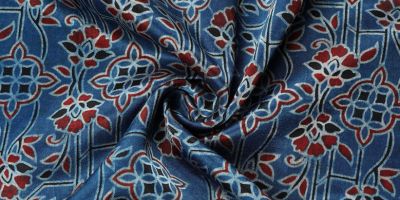
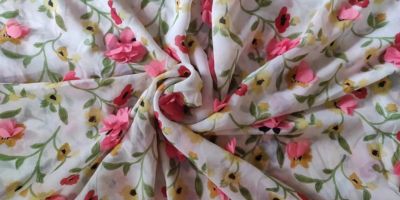
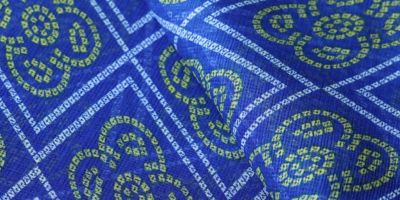
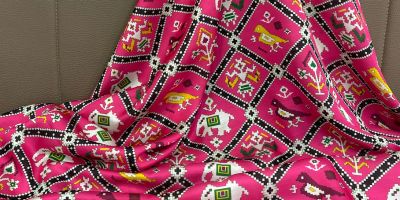
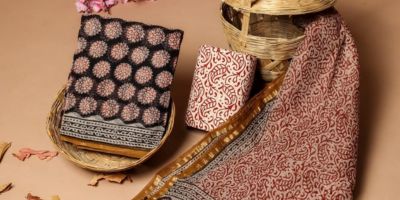
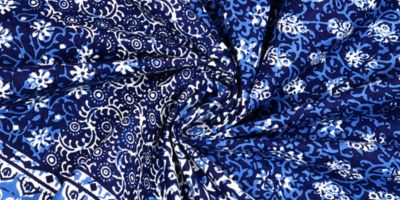
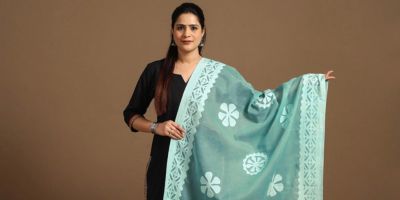
Bherugarh prints, a form of batik, are an age-old textile printing tradition from the Bherugarh village near Ujjain, Madhya Pradesh, India. The practice of batik, a wax-resist dyeing technique, has roots dating back 2,000 years and is found in regions like India, Indonesia, and Japan. The Bherugarh cluster of artisans uses both geometric and tribal art inspirations in their work. Key Aspects of Bherugarh Prints: Batik Technique: Bherugarh artisans use a wax-resist dyeing method. They apply hot wax to specific areas of fabric, dye the cloth, and then remove the wax to reveal the design. Dabu Technique: In addition to batik, Bherugarh also practices Dabu, a unique method of resist dyeing using sand to create patterns. Design Inspirations: The designs often draw inspiration from geometric and tribal art styles, with motifs sometimes based on natural elements like birds, animals, and plants. Historical Significance: The history of batik in India can be traced back over 2,000 years, with the practice of resist printing on cotton fabrics preceding the development of similar techniques in other nations. Evolution and Modernization: While rooted in tradition, contemporary Bherugarh prints are also incorporating simplified patterns and innovative color combinations to appeal to modern tastes. Geographical Context: Bherugarh, a village near Ujjain, is a focal point for this craft, with the village’s location on the banks of the Shipra River also influencing the craft’s practices. Role of Artisans: Bherugarh is a community of artisans, with over 800 men and women involved in the craft.
We use cookies to ensure that we give you the best experience on our website. If you continue to use this site we will assume that you are happy with it.Yes, I'm Accept