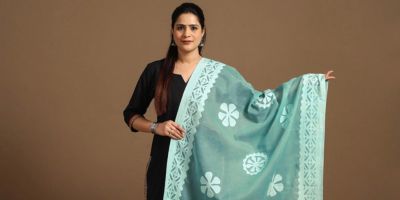
Kota Doria, a lightweight, checkered fabric, has a rich history rooted in the 17th century when weavers from Mysore were brought to Kota by Rao Kishore Singh. Initially used for turbans and pagdis (headgear), it later evolved into sarees. The fabric gained popularity, particularly among the royal family, and became a symbol of luxury and craftsmanship. Today, Kota Doria is renowned for its delicate weave, unique “khat” (square) patterns, and enduring appeal.
Here's a more detailed look at the history:
Origins: The origins of Kota Doria are debated, but one popular theory suggests it emerged in Mysore and was brought to Kota by Rao Kishore Singh, a Mughal army general, in the 17th century. Early Use: Initially, Kota Doria was used for turbans and other headgear by the royal family and nobility. Evolution into Sarees: As the weaving technique matured, Kota Doria became suitable for broader dhotis, and eventually, for the creation of beautiful sarees. Royal Patronage: The royal patronage of Kota Doria during the reign of Rao Kishore Singh helped to establish its prestige and popularity. Unique Weaving Technique: The fabric’s characteristic “khat” pattern, created by the contrasting weft and warp threads, is a key feature of Kota Doria. Masuria Connection: Kota Doria was also known as Masuria Doria, and some believe the name refers to the Mysore origin of the weavers or the fabric’s resemblance to masoor lentils. Modern Relevance: Today, Kota Doria continues to be a popular choice for sarees, dupattas, and other garments, showcasing its enduring appeal and craftsmanship.
We use cookies to ensure that we give you the best experience on our website. If you continue to use this site we will assume that you are happy with it.Yes, I'm Accept